Senate Armed Services Committee Releases Report on Counterfeit Parts in DOD Supply Chain
March 28, 2012. The Senate Armed Services Committee has released a
report entitled "Inquity into Counterfeit Electronic Parts in the
Department of Defense Supply Chain," S.Rpt. 112-167, which found over
1,800 counterfeit parts in just a sample of the supply chain checked for
a two year time span. For those cases in which the investigators then
followed the supply chain, they found that some 70 percent came from
China. Id. at ii. The parts identified went into missiles, aircraft,
and helicopters. The report finds that not only do the counterfeit
parts jeopardize mission effectiveness and safety, but they also cost a
great deal of money to rectify once detected in existing DOD weapons
systems and equipment.
This investigation began a year ago, but, committee chair, Carl
Levin (D., MI) and ranking member John McCain (R., AZ) cosponsored an
amendment to the National Defense Authorization Act for FY 2012 which
was signed into law in December 2011 aimed at addressing the problem of
counterfeit parts. That amendment became §818 entitled "Detection and
Avoidance of Counterfeit Electronic Parts" which requires action by the
Department of Defense to detect and deter the problem. It also amends
§2320 of Title 18 of the U.S. Code to increase criminal penalties for
those engaged in trafficking in counterfeit goods or services.
The Senate investigation followed in the wake of studies by the
Department of Commerce, "Defense Industrial Base Assessment: Counterfeit
Parts" (January 2010) and the Government Accountability Office on that
subject in 2010, "Defense Supplier Base: DOD Should Leverage Ongoing
Initiatives in Developing Its Program to Mitigate Risk of Counterfeit
Parts."
Read the Armed Services Committee Report.
Read the Committee Press Release.
Access the Commerce Department 2010 Report.
Access the 2010 GAO report.
Access P.L. 112-81 National Defense Authorization Act for FY 2012.
Monday, May 5, 2014

Anyone Seen the Guy Who Gave GM $49 Billion in Taxpayer Money?
Anyone Seen the Guy Who Gave GM $49 Billion in Taxpayer Money? That would be Steve Rattner, the auto czar.
Rattner has gone largely unmentioned in the coverage of the GM defective-switch scandal. He’s not saying much on his own venues, and apparently no one wants to ask him any questions about President’s Auto Industry Task Force, just how thorough their review of GM was, and how they managed to miss so many consequential lurking safety issues.
There is plenty of blame to go around here. First there’s the serious accusation that GM hid just how deadly the problem could be:…
Then there’s the charge that federal safety inspectors and regulators are now blaming GM to divert attention from their own bureaucratic inertia . .
Rattner has gone largely unmentioned in the coverage of the GM defective-switch scandal. He’s not saying much on his own venues, and apparently no one wants to ask him any questions about President’s Auto Industry Task Force, just how thorough their review of GM was, and how they managed to miss so many consequential lurking safety issues.
There is plenty of blame to go around here. First there’s the serious accusation that GM hid just how deadly the problem could be:…
Then there’s the charge that federal safety inspectors and regulators are now blaming GM to divert attention from their own bureaucratic inertia . .
How Will the Ukraine Crisis Affect the Defense Budget?
How Will the Ukraine Crisis Affect the Defense Budget?
- By Charles S. Clark
- April 28, 2014
- 16 Comments
RELATED
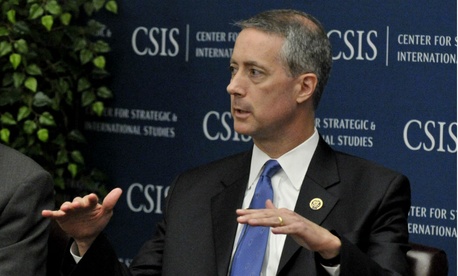 Rep. Mac Thornberry, R-Texas
flickr user CSIS
Rep. Mac Thornberry, R-Texas
flickr user CSIS
Russian President Vladimir Putin’s ongoing push into Ukraine represents
a “startling brazenness not seen in history,” a top House defense
thinker said on Monday. “It means we need to expand the range of
military options for which we have to be prepared,” according to Rep.
Mac Thornberry, R-Texas, a member of the Armed Service Committee.
On a recent trip to Asia just ahead of President Obama, “I heard that China is a rising power and the U.S. is a declining one, which doesn’t mean conflict is inevitable, only that there’s the potential for increasing complexity,” Thornberry told a Brookings Institution panel on the future of defense spending.
The House Republican leadership, Thornberry said, agrees with Obama’s stand on the need to abide by treaty commitments and seek a diplomatic solution to the Ukraine crisis. “But our allies need for us to be a reliable friend, so we must plan for a range of options,” he added. “Slowly ratcheting up sanctions as in Ukraine seems not to be effective.”
What is needed is a hike in defense spending because “what Russia and China and others respect is strength, the number of ships, and no other language,” he added. “There’s no magic number of 3 percent or 5 percent that means we’re safe,” Thornberry said. “But the world is watching what we do, and even though we thought the Cold war was over, what Russia is doing now is a big deal.”
His Democratic counterpart, Rep. Rick Larsen of Washington, said Obama’s recent trip to Asia to rebalance the U.S. posture there was “largely successful, a work in progress that’s progressing.” The defense debate must be broad and include discussion of health care, trade, diplomacy and economic growth, he said. “Today’s budget gives me very little hope Congress will re-address the sequester, cuts from which still loom from 2016 on," Larsen noted. “ I see myself taking a vote some late night in the future, and nothing focuses the mind like a man about to be hanged. But when we deal with the sequester, we can’t just deal with discretionary or defense spending but must address 100 percent of the budget.”
Larsen said the sanctions, which the United States expanded on Monday to target friends of Putin—as well as the recent deployment of U.S. troops to the Baltic states—are a “huge penalty on Putin.” But the Russian president “has no concern about what our defense budget will look like two to three years from now; he is concerned with how we use it today,” Larsen added.
The defense budget’s main problem, Larsen said, is that “while we are investing in the military, we are also investing in military things that are no longer useful or effective, because Congress and the services’ bureaucracies want to hold onto them. It’s not to say that a bigger budget is a better budget,” Larsen added, warning that many U.S. allies (unlike Russia and China) are out-investing the United States in education, medicine and transportation. Larsen also implored the Pentagon to get a handle on its ongoing auditing problems.
The auditing issue, agreed Thornberry, concerns all in Congress who are frustrated that the Pentagon can’t “show how much ammunition has been wasted because we can’t keep track of where we got it.”
Another key tool in the spending debate, Thornberry added, is Pentagon acquisition reform, a project that House leaders recently tasked him with leading. “Acquisition people ask me why I think reform might work this time,” Thornberry said, “and I tell them it’s bipartisan, bicameral, and bi-whatever you say to mean you’re working with the Pentagon,” led by Frank Kendall, undersecretary for acquisition, technology and logistics.
“All agree that our systems cost more but also that acquisitions are too slow,” Thornberry said. “China can build a ship in 36 months -- we’re not in the ballpark.” The answer won’t be a 2,000-page bill, he added, but perhaps a central acquisition authority, pilot programs, and stronger oversight working with the department on regulations. “We have to look deeper and change the incentives.”
Still, taming the acquisition process “won’t be enough” to confront the rising defense spending by Russia and China as well as the “tremendous number of threats” coming from al Qaeda and the competition in space-based weapons, Thornberry said. “You’d have to do a lot of acquisition reform to get a new aircraft carrier. There aren’t enough resources under any scenario. We need to do both.”
On a recent trip to Asia just ahead of President Obama, “I heard that China is a rising power and the U.S. is a declining one, which doesn’t mean conflict is inevitable, only that there’s the potential for increasing complexity,” Thornberry told a Brookings Institution panel on the future of defense spending.
The House Republican leadership, Thornberry said, agrees with Obama’s stand on the need to abide by treaty commitments and seek a diplomatic solution to the Ukraine crisis. “But our allies need for us to be a reliable friend, so we must plan for a range of options,” he added. “Slowly ratcheting up sanctions as in Ukraine seems not to be effective.”
What is needed is a hike in defense spending because “what Russia and China and others respect is strength, the number of ships, and no other language,” he added. “There’s no magic number of 3 percent or 5 percent that means we’re safe,” Thornberry said. “But the world is watching what we do, and even though we thought the Cold war was over, what Russia is doing now is a big deal.”
His Democratic counterpart, Rep. Rick Larsen of Washington, said Obama’s recent trip to Asia to rebalance the U.S. posture there was “largely successful, a work in progress that’s progressing.” The defense debate must be broad and include discussion of health care, trade, diplomacy and economic growth, he said. “Today’s budget gives me very little hope Congress will re-address the sequester, cuts from which still loom from 2016 on," Larsen noted. “ I see myself taking a vote some late night in the future, and nothing focuses the mind like a man about to be hanged. But when we deal with the sequester, we can’t just deal with discretionary or defense spending but must address 100 percent of the budget.”
Larsen said the sanctions, which the United States expanded on Monday to target friends of Putin—as well as the recent deployment of U.S. troops to the Baltic states—are a “huge penalty on Putin.” But the Russian president “has no concern about what our defense budget will look like two to three years from now; he is concerned with how we use it today,” Larsen added.
The defense budget’s main problem, Larsen said, is that “while we are investing in the military, we are also investing in military things that are no longer useful or effective, because Congress and the services’ bureaucracies want to hold onto them. It’s not to say that a bigger budget is a better budget,” Larsen added, warning that many U.S. allies (unlike Russia and China) are out-investing the United States in education, medicine and transportation. Larsen also implored the Pentagon to get a handle on its ongoing auditing problems.
The auditing issue, agreed Thornberry, concerns all in Congress who are frustrated that the Pentagon can’t “show how much ammunition has been wasted because we can’t keep track of where we got it.”
Another key tool in the spending debate, Thornberry added, is Pentagon acquisition reform, a project that House leaders recently tasked him with leading. “Acquisition people ask me why I think reform might work this time,” Thornberry said, “and I tell them it’s bipartisan, bicameral, and bi-whatever you say to mean you’re working with the Pentagon,” led by Frank Kendall, undersecretary for acquisition, technology and logistics.
“All agree that our systems cost more but also that acquisitions are too slow,” Thornberry said. “China can build a ship in 36 months -- we’re not in the ballpark.” The answer won’t be a 2,000-page bill, he added, but perhaps a central acquisition authority, pilot programs, and stronger oversight working with the department on regulations. “We have to look deeper and change the incentives.”
Still, taming the acquisition process “won’t be enough” to confront the rising defense spending by Russia and China as well as the “tremendous number of threats” coming from al Qaeda and the competition in space-based weapons, Thornberry said. “You’d have to do a lot of acquisition reform to get a new aircraft carrier. There aren’t enough resources under any scenario. We need to do both.”
The Data Act Is About to Shake Up Federal Operations
The Data Act Is About to Shake Up Federal Operations
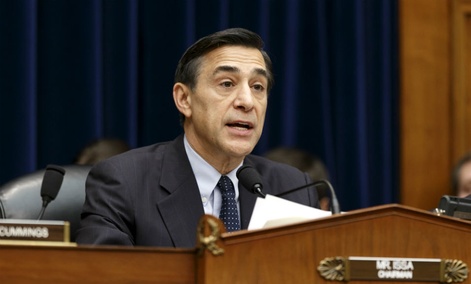 House Oversight Committee Chairman Rep. Darrell Issa, R-Calif.
//
J. Scott Applewhite/AP
House Oversight Committee Chairman Rep. Darrell Issa, R-Calif.
//
J. Scott Applewhite/AP
5

This story has been updated to include industry comment.
Legislation aimed at dramatically increasing the transparency of federal spending data is on its way to President Obama’s desk after the House voted on Monday to approve a Senate-passed version of the bill.
The Digital Accountability and Transparency Act, or DATA Act, will mandate uniform coding for federal spending, so federal officials, lawmakers and watchdogs can track particular types of spending from one agency to another.
The legislation, which was modeled on spending transparency measures implemented with president Obama’s 2009 stimulus bill, will also give federal contractors and grantees a single portal to report how they’re spending taxpayer money.
The bill passed the House on a voice vote Monday afternoon.
House Oversight and Government Reform Committee Chairman Darrell Issa, R-Calif., called the DATA Act “without a doubt the most important transparency reform,” his committee has introduced during the past four years in a floor statement on Monday.
By making it easier to track federal spending, the law could save the government billions of dollars in improved performance and reduced waste and fraud, he said. Less than 1 percent of stimulus spending was lost to fraud, which is significantly lower than most government spending.
“The DATA Act is but the first shot of a technology revolution that will transform the way we govern,” he said.
Del. Eleanor Holmes Norton, D-D.C., who introduced the DATA Act for Democrats said the bill would “improve transparency and make government work better.”
Issa sponsored the House version of the DATA Act along with Oversight ranking member Elijah Cummings, D-Md. The Senate version was sponsored by Sens. Mark Warner, D-Va., and Rob Portman, R-Ohio.
The White House suggested rolling back some of the DATA Act’s transparency language in a document leaked in January, including by removing a requirement that agencies publish spending information using common data standards. Instead the White House suggested agencies use open data practices. That would have ensured spending information was publicly available but not that it was consistent across agencies.
The suggested changes were criticized by transparency groups, and Sen. Warner refused to water down the bill.
The Professional Services Council, a government contractor’s industry organization, praised the DATA Act’s passage, stating the bill “avoids broad, duplicative reporting that would have imposed significant burdens on industry.”
Other industry groups also praised the bill, including TechAmerica and the IT Alliance for Public Sector, as well as transparency groups including the Center for Data Innovation.
Legislation aimed at dramatically increasing the transparency of federal spending data is on its way to President Obama’s desk after the House voted on Monday to approve a Senate-passed version of the bill.
The Digital Accountability and Transparency Act, or DATA Act, will mandate uniform coding for federal spending, so federal officials, lawmakers and watchdogs can track particular types of spending from one agency to another.
The legislation, which was modeled on spending transparency measures implemented with president Obama’s 2009 stimulus bill, will also give federal contractors and grantees a single portal to report how they’re spending taxpayer money.
The bill passed the House on a voice vote Monday afternoon.
House Oversight and Government Reform Committee Chairman Darrell Issa, R-Calif., called the DATA Act “without a doubt the most important transparency reform,” his committee has introduced during the past four years in a floor statement on Monday.
By making it easier to track federal spending, the law could save the government billions of dollars in improved performance and reduced waste and fraud, he said. Less than 1 percent of stimulus spending was lost to fraud, which is significantly lower than most government spending.
“The DATA Act is but the first shot of a technology revolution that will transform the way we govern,” he said.
Del. Eleanor Holmes Norton, D-D.C., who introduced the DATA Act for Democrats said the bill would “improve transparency and make government work better.”
Issa sponsored the House version of the DATA Act along with Oversight ranking member Elijah Cummings, D-Md. The Senate version was sponsored by Sens. Mark Warner, D-Va., and Rob Portman, R-Ohio.
The White House suggested rolling back some of the DATA Act’s transparency language in a document leaked in January, including by removing a requirement that agencies publish spending information using common data standards. Instead the White House suggested agencies use open data practices. That would have ensured spending information was publicly available but not that it was consistent across agencies.
The suggested changes were criticized by transparency groups, and Sen. Warner refused to water down the bill.
The Professional Services Council, a government contractor’s industry organization, praised the DATA Act’s passage, stating the bill “avoids broad, duplicative reporting that would have imposed significant burdens on industry.”
Other industry groups also praised the bill, including TechAmerica and the IT Alliance for Public Sector, as well as transparency groups including the Center for Data Innovation.
Congressman: Bundy Militia Has Set Up Road 'Checkpoints' In Nevada
Congressman: Bundy Militia Has Set Up Road 'Checkpoints' In Nevada

AP Photo / JASON BEAN
They have also maintained a presence, sometimes armed, along highways and roads, as well as community sites like churches and schools, the letter asserted.
Journalists on the scene at the height of the Bundy Ranch standoff estimated as many as 1,000 protesters had gathered earlier this month.
Bundy Update: If This Politician Has His Way, The Feds Could Start Taking Out The Militia
Bundy Update: If This Politician Has His Way, The Feds Could Start Taking Out The Militia
"Get rid of these armed separatists."

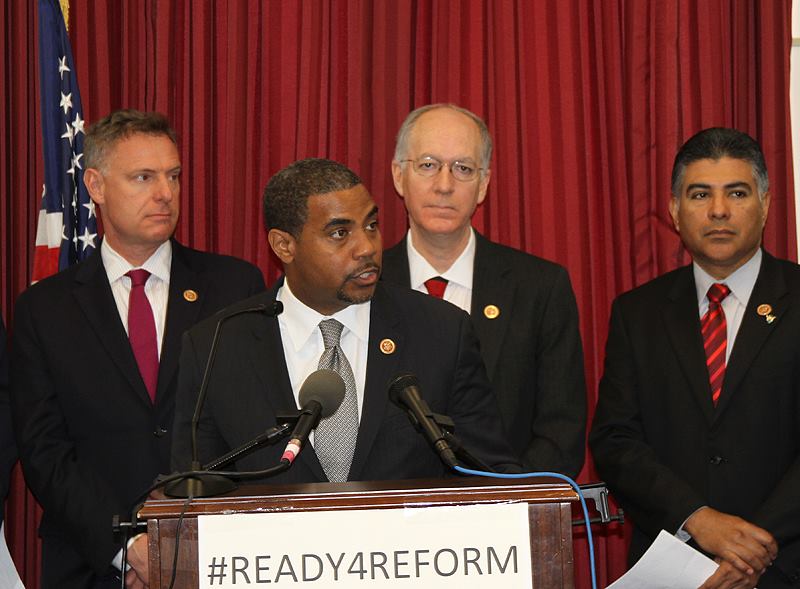
His latest call to rid the area of these protesters came this past weekend during comments he made at an event in a neighboring town.
“And that is why I am calling on [Gov.] Brian Sandoval, Sen. Dean Heller, the sheriff and any other elected official in Nevada to do their part to get rid of these armed separatists.”
Despite the fact that Nevada law allows individuals to carry firearms, Horsford wants local law enforcement to force these concerned citizens out of the community. Furthermore, he has called for a federal investigation into the activities of the remaining protesters.
Both Sandoval and Heller are Republicans who have, to varying degrees, spoken out against the invasion of federal Bureau of Land Management agents last month in Clark County.
Heller has been more supportive of Bundy and his supporters, however, describing protesters as “patriots.”
Sheriff Doug Gillespie did not immediately comment on the latest demand made by Horsford. For his part, Sandoval offered a measured response to a question regarding whether Gillespie is planning to use force in removing the protesters.
“No,” he said, “and even if he had said that, I wouldn’t share that with you; because certainly that’s a conversation between the two of us.”
Late last week, a post on the Bundy Ranch Facebook page indicated the family was calling on protesters to join them in filing a criminal complaint against the BLM. A lengthy post published Friday offered a transcription of a statement delivered by Ammon Bundy at the Clark County Sheriff’s Office earlier that day.
Post by Bundy Ranch.
Photo Credit: Facebook/U.S. Rep. Tony Cárdenas
Gainesville Sun) Florida students living in the country illegally will be allowed to qualify for in-state college tuition rates under a bill passed by the Legislature.
Written By : Alyssa Lafage
May 4, 2014
The once highly regarded Governor of Florida Rick Scott has chosen to abandon his conservative principles by supporting a bill that would give in-state tuition to people living in his state illegally. This move puts Florida amongst the ranks of other sanctuary states like California and New Jersey in allowing illegal immigrants to further drain taxpayers.
This particular in-state tuition bill had been in the works for more than a decade but hadn’t been able to gain traction until now. It’s hard to believe this timely passage doesn’t have something to do with the establishment GOP’s flawed obsession with obtaining the Hispanic vote.(Gainesville Sun) Florida students living in the country illegally will be allowed to qualify for in-state college tuition rates under a bill passed by the Legislature.The Florida House voted 84-32 on Friday for the bill, which offers in-state college tuition rates to undocumented students who had attended a Florida school for at least three years before graduation.The Senate passed the bill Thursday. It heads to Gov. Rick Scott, who says he’ll sign it into law.The current in-state rate is one-quarter of what out-of-state students and those in the country illegally pay.The in-state college tuition bill had been considered several times before, when it drew strong opposition from many Republicans.But this year, Scott and other GOP leaders such as House Speaker Will Weatherford backed the bill.

Subscribe to:
Posts (Atom)